

While most of us are stuck on planet Earth, we’re lucky enough to have a fairly transparent atmosphere. This allows us to look up at the sky and observe changes. The ancients noticed planets wandering across the sky, and occasional visitors such as comets.
Thousands of years ago, most thought the stars ruled our destiny. Today, however, we can see science at work in the planets, asteroids and comets close to home. So why take a look at the Solar System? What can it teach us?
1. The definition of a planet and a moon is fuzzy.
We all know of that famous International Astronomical Union vote in 2006 where Pluto was demoted from planethood into a newly created class called “dwarf planets.” But the definition drew controversy among some, who pointed out that no planet — dwarf or otherwise — perfectly clears the neighborhood in its orbit of asteroids, for example. Moons are considered to orbit around planets, but that doesn’t cover situations such as moons orbiting asteroids or double planets, for example. Goes to show you the Solar System requires more study to figure this out.
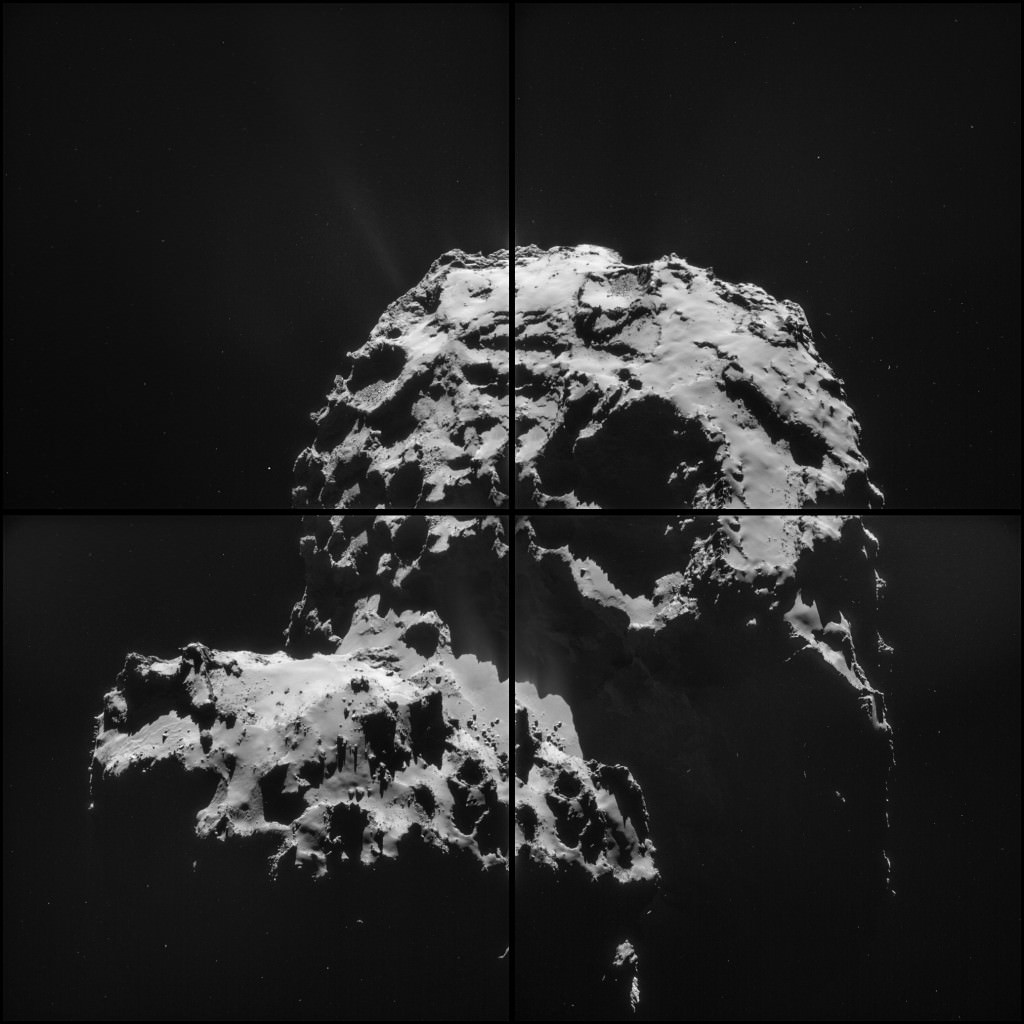
2. Comets and asteroids are leftovers.
No, we don’t mean leftovers to eat — we mean leftovers of what the Solar System used to look like. So while it’s easy to get distracted by the weather and craters and prospects for life on planets and moons, it’s important to remember that we must also pay attention to the smaller bodies. Comets and asteroids, for example, could have brought organics and water ice to our own planet — providing what we need for life.
3. The planets are all on the same “plane” and orbit in the same direction.
When considering the IAU’s definition of planets, we come up with eight: Mercury, Venus, Earth, Mars, Jupiter, Saturn, Uranus and Neptune. You’ll notice that these bodies tend to follow the same path in the sky (called the ecliptic) and that they orbit the Sun in the same direction. That supports the leading theory for the Solar System’s formation, which is that the planets and moons and Sun formed from a large gas and dust cloud that condensed and spun.
4. We’re nowhere near the center of the galaxy.
We can measure vast distances across the universe by looking at things such as “standard candles” — a type of exploding stars that tend to have the same luminosity, which makes it easier to predict how far away they are from us. At any rate, looking at our neighborhood, we’ve been able to figure out we’re nowhere near the Milky Way galaxy’s center. We’re about 165 quadrillion miles away from the center supermassive black hole, NASA says, which is probably a good thing.
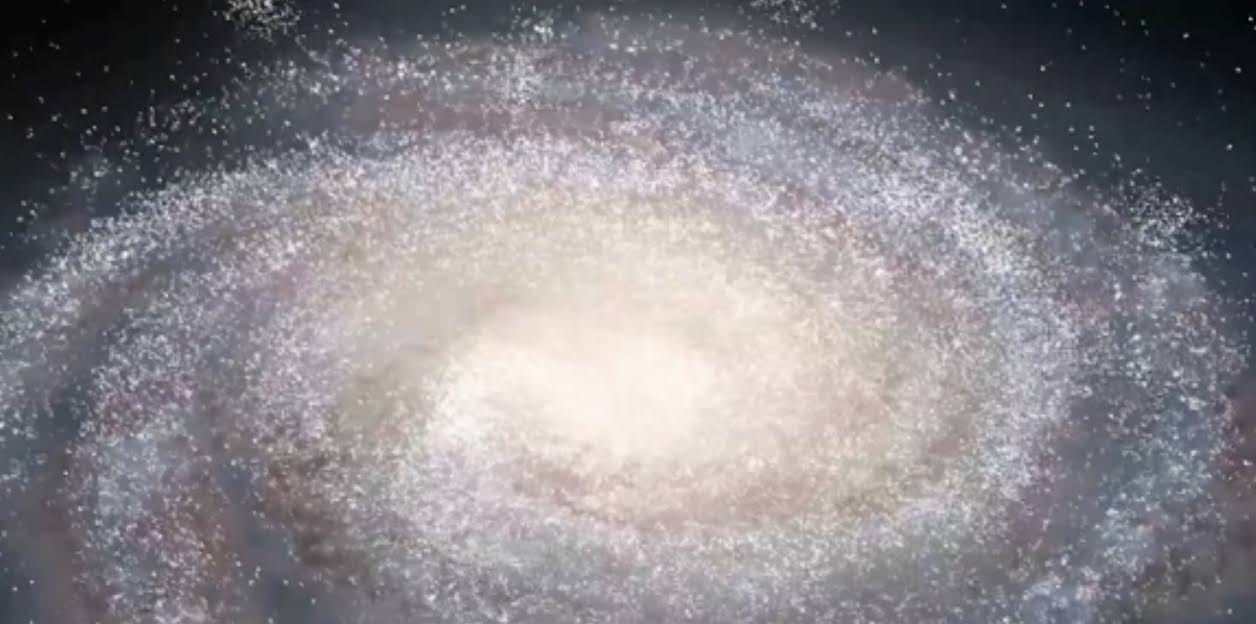
Dana Berry / SkyWorks Digital, Inc. and Jonathan Bird (Vanderbilt University)
5. But the Solar System is bigger than you think.
Beyond the orbit of Neptune (the furthermost planet), it takes a long time to leave the Solar System. In 2012, some 35 years after leaving Earth on a one-way trip to the outer solar Solar System, Voyager 1 passed through the area where the Sun’s magnetic and gas environment gives way to that of the stars, meaning that it is interstellar space. That was an astounding 11 billion miles (17 billion kilometers) away from Earth, or roughly 118 equivalent Earth-sun distances (astronomical units).
6. The Sun is hugely massive.
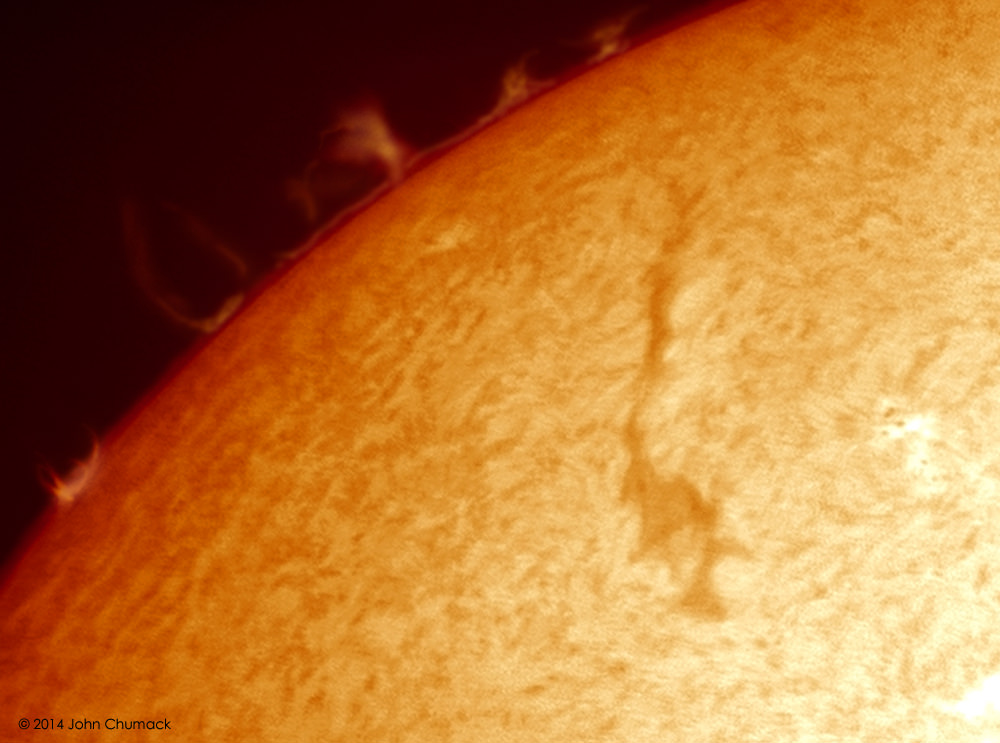
Just how massive? 99.86% of the Solar System’s mass is in our local star, which goes to show you where the real heavyweight is. The Sun is made up of hydrogen and helium, which shows you that these gases are far more abundant in our neighborhood (and the Universe generally) than the rocks and metals we are more familiar with here on Earth.
7. We haven’t finished searching for life here.
So we know for sure that life exists on Earth, but that doesn’t rule out a whole bunch of other places. Mars had water flowing on it in the ancient past, and has frozen water at its poles — making astrobiologists think it might be a good candidate. There also are a range of icy moons that could have oceans with life below the surfaces, such as Europa (at Jupiter) and Enceladus (at Saturn). There’s also the interesting world of Titan, which has “prebiotic chemistry” — chemistry that was a precursor to life — on its surface.
8. We can use the Solar System to better understand exoplanets.
Exoplanets are so far away, and so small in our telescopes, that it’s difficult to see very much detail in their atmospheres. But by looking at the chemistry of Jupiter, for example, we can make some predictions about gas giants further afield. If we look at Earth and Neptune, we can get a better sense of the range of planetary sizes on which life could exist (those “super-Earths” and “mini-Neptunes” you sometimes hear mentioned.) And even looking at where water freezes in our own Solar System can help us better understand the ice line in other locations.
We have written articles about the solar system for Universe Today. Here are facts about the planets in the Solar System. We have recorded a whole series of podcasts about the Solar System at Astronomy Cast. Check them out here.
But no one has landed on the moon all of those are hollywood things.
Yes… and you are a fiction, too!
cooooooooooooool
i like tis site and its fact